
Local Marketing Strategies: What to Do First, Second, and Third
I run local marketing for small businesses out of Baltimore, MD. This is the strategy I use: which channels earn their keep, what they cost, and the order to run them in. I learned it spending my own money first.

On this page
What are local marketing strategies?
Local marketing strategies are the moves that get a small business found and chosen by the customers within driving distance: your website, your Google Business Profile, your reviews, local search, your ads, and the follow-up that turns a click into a booked job. The strategy part is the order you run them in.
I run Another Monday out of Baltimore, MD, and this is the same thinking behind the work we do for businesses across the United States.
- First, the foundation. A website that loads and converts, a fully built Google Business Profile, and a review habit, which is mostly how to get more Google reviews by asking every customer the same way. Free or close to it, and everything else leans on it.
- Second, local search. The pages and the profile work that put you in the map pack for what you actually sell.
- Third, paid. Google Ads once the first two are carrying, because ads sent to a page that does not convert are a donation.
You already know the feeling this is meant to fix. The work is good, and the reviews are kind when they come.
The phone still has quiet weeks, because the potential customers searching for exactly what you do keep landing on somebody else.
Your customers didn't disappear. They're just finding someone else first.
Most advice makes this harder than it needs to be. You'll hear that you should post daily, run ads on six platforms, start a podcast.
You don't have to, and most of those local marketing strategies were written for companies that look nothing like yours. Local marketing is a narrower game than big-brand marketing, and the narrowness works in your favor: your buyer is the homeowner three miles away typing 'dryer repair near me' at 9:40 on a Tuesday night.
Which marketing channels matter for a local business?
Two dozen platforms will take your marketing money. For most local businesses, six of them do almost all the work, whether you want foot traffic or booked jobs.

A few channels didn't make the cards and still pull weight. Email is the cheapest way to get repeat business, because you own the list and no algorithm sits between you and your customers. Offline counts too, and for a storefront it is often where the foot traffic comes from: sponsoring the little league team, a booth at the neighborhood festival, partnerships with businesses that share your customers, and community postcards mailed to the streets you want more work from.
Two of these run deep enough that I wrote them up on their own: the search engine optimization playbook behind our Baltimore SEO work, and the way we handle Google Ads management. For the social piece, short-form video is where most local attention is. And when the question turns to cost, our small business marketing budget guide puts monthly numbers on every channel.
The community side most guides skip
Local marketing is not only what happens on a screen. Local events put you in front of local customers who would never have searched for you, a sponsorship board at the rec center runs all season for the price of one week of ads, and businesses that share your customers will trade referrals if you ask. Small businesses with a storefront get foot traffic out of this that no dashboard ever attributes properly.
Word of mouth is still the strongest signal a local community produces, and the honest catch is that you cannot schedule it. What you can do is give it somewhere to land: a Google listing that comes up when somebody repeats your name, and social media a potential customer can check before they call. That is the whole reason a marketing strategy sequences the foundation first, and why the service behind the sale matters as much as the marketing around it.
What social media is actually for here
Social media rarely makes a stranger call a local business the first time they see a post. What it does is close the gap for potential customers who already heard your name: they look you up, they see recent work, and the decision gets easier. That is a real job, and it is a different job from search, which is why the two sit in different places in the order of operations.
Small businesses lose months treating social media as the whole marketing strategy. Post the work you already do, tag the local community and the local events you show up at, and let it support the channels that produce demand rather than carrying the plan. When local marketing is working, social is the proof a potential customer checks on the way to calling you.
Pick the two channels your customers use, then fund them properly.
The order of operations most owners get backwards.
Running my own businesses taught me something uncomfortable: the order you build in matters more than how much you spend. The owners who struggle are usually on step three with step one still broken.
Fix the foundation
Website, Google Business Profile, reviews, call tracking. Fix where the attention lands before you pay to send any. This is the cheapest phase and the one owners skip.
Show up where people are searching
Local SEO and Google Ads, aimed at people already searching for what you do. Ads bring leads in weeks. SEO takes months to start moving.
Stay familiar
Content, social, email, community. These marketing strategies work once the first two phases exist, because the attention has somewhere to go.
Cost, speed, and staying power differ a lot by channel:
| Channel | What it mostly costs | Speed to first results | Staying power |
|---|---|---|---|
| Google Business Profile + reviews | Time, and the habit of asking | Weeks | Compounds for years |
| Website | A website, then upkeep | Immediate once live | Years. It's an asset you own |
| Local SEO | Content and expertise | Months | Keeps ranking after the work's done |
| Google Ads | Ad spend plus management | Days to weeks | Stops when the budget stops |
| Social + content | Consistency, mostly | Months | Builds familiarity, slowly |
| Almost nothing | Days, once you have a list | As long as the list stays warm |
Fix the website first. Ads only multiply what it already does.
How do you know if it's working?
Reach is the easiest thing to measure. The number that should decide your budget is cost per lead: what you paid to make the phone ring once. It lets a Google ad, a mailer, and a sponsorship compete for the same dollar on even terms.
The tracking is simple to set up. Call tracking, a form that tags its source, and the habit of asking 'how did you hear about us?' cover most of it. Once you know what a lead costs on each channel, the budget decisions get easy.
What you paid to make the phone ring once. Divide the spend by the leads it produced.
Calls, form fills, direction requests, and booked jobs, each one tagged with where it came from.
Long enough for search to move, short enough to cut what isn't earning its line.
If it doesn't make the phone ring, it doesn't count.
What does local marketing cost?

Marketing money goes to three places: the asset, which is your website, the fuel, which is ad spend, and the labor, which is your hours or an employee's or ours.
Small businesses get in trouble when they fund one and starve the other two, usually by pouring the whole budget into fuel. Ads bring potential customers to a page that was never built to catch them.
Budget by what a customer is worth, not by what a percentage says.
The U.S. Small Business Administration's long-standing guidance says a small business should put 7 to 8 percent of revenue toward marketing, and backwards math is more useful than that.
Work out what a new customer is worth to you over a year, then decide what you'd pay to reach one of the potential customers already looking.
If a customer is worth $1,200 and a channel produces leads at $40, keep feeding that channel.
When you want help, my pricing is public. Plans run $800, $1,550, and $3,500 a month, the $1,550 Growth plan is the one I recommend, and a new website gets built inside the plan. Running Google Ads or Meta Ads starts at $500 a month per channel on top and steps up with the size of the account, because a bigger budget means more campaigns and more hours, never a cut of what you spend. The ad budget itself goes straight to the platform at a $30 a day minimum.
Whatever you spend, hold it to one test: can you trace the leads back to it?
Should you run it yourself or hand it off?
Both answers are fine, and most small businesses try both at some point.
Run it yourself if you've got more time than budget. The foundation phase of any local marketing plan is doable without help.
I wrote a step-by-step guide on how to promote your business locally that starts with the free moves. Those free moves are where most local marketing strategies should begin anyway.
Hand it off when your hours are worth more on the job than in a dashboard, or when ad spend starts leaking money you can't trace.
That's when a local business marketing agency earns its fee. It's what our marketing services cover, monthly report in plain English included.
Not sure which one fits you? Call 410-999-0169 or send a text. You get me either way.
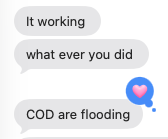

Also want to add that you consistently outperform our Mailer campaigns with conversions. So cool to see the comparisons and just wanted to share that!
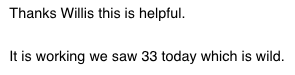
Run it yourself or hand it off. Either way, it should pay for itself.
Here is the order I actually ran for an appliance repair shop.
I moved the site off a website builder onto a custom build and made sure every service they sell had its own page. The shop did not have a digital way for inquiries aside from their phone number, so I made sure the contact forms were wired for maximum impact to the customer and to the shop, and each one stores the submission on a Google Sheet while also emailing the shop and a confirmation to the customer. Search waited for that first stretch.
The Google Business Profile came next, because for a repair trade the map pack is the shortest path between a broken machine and a phone call. It is also where the potential customers who never visit a website end up. Categories, service list, hours, service area, and photos of real repairs.
Paid came last.
Every one of those local marketing strategies would have worked in a different order too, just slower and more expensively.
Questions owners ask about local marketing.
What are the best marketing strategies for a local business?
The best marketing strategies for a local business are the ones that reach people already looking for what you sell: a Google Business Profile built out properly, a review habit you actually keep, and a website that loads fast and makes calling easy. Local search and Google Ads go on top of those, and content, social and email come last, because they keep you familiar between purchases rather than creating demand.
What is local marketing?
Local marketing is the work of getting found and chosen by customers near your business, through your website, Google Business Profile, reviews, local search rankings, paid ads, and community presence. The difference from general marketing is the radius: your job is to be the obvious choice within a few miles of your front door.
What's the difference between local marketing and digital marketing?
Digital marketing is any promotion that happens online, anywhere, for anyone. Local marketing aims at customers in a specific area and includes offline moves too, like sponsorships and direct mail. Most of it runs through digital channels, and the targeting, the keywords, and the goal of a nearby customer calling or walking in all stay local.
What's the most effective marketing channel for a local business?
Search wins for most local businesses. Someone typing 'emergency plumber near me' has intent no social post can match, which is why Google Business Profile, local SEO, and Google Ads usually beat everything else per dollar. Reviews are the runner-up, since they close the customers search brings in. Social media and email do their best work bringing past customers back.
How much should a local business spend on marketing?
The U.S. Small Business Administration's long-standing guidance for a small business is 7 to 8 percent of revenue, with newer businesses spending at the high end to build momentum. The better question is what a new customer is worth to you over a year, because a $500 monthly budget that reliably produces $3,000 in booked work isn't a cost problem. Start smaller than you think, measure cost per lead, then feed what works.
How can I market my business with no budget?
Free moves get a local business further than most owners expect. Claim and fully build out your Google Business Profile, ask every happy customer for a review the day of the job, get listed in the directories your customers check, and show up at the local events where your neighbors already are. Together those are often worth more than a small ad budget spent too early, and they put you in front of local customers who were never going to find you through an ad.
How long does local marketing take to work?
The timeline for local marketing depends on the channel. Google Ads can make the phone ring in days because you're buying placement. A rebuilt Google Business Profile tends to show movement within weeks. Local SEO usually needs a few months before rankings move, and it keeps producing after the work's done. A fair test for any plan is 90 days with the numbers in front of you.
Do social media followers matter for a local business?
Follower counts matter far less than most local business owners fear. A landscaper with 300 local followers who books jobs every week is winning. An account with 20,000 scattered followers and a quiet phone is losing. Attention only pays when it belongs to local customers close enough to buy, so judge social by inquiries and repeat business.
What should a local business set up first?
Your Google Business Profile and your review habit come first, then the website. The profile is free and controls the map pack, reviews decide whether searchers pick you, and the website is where every channel eventually sends people. Get those three right before you spend on ads, or you'll pay to send traffic somewhere that can't convert it.
How do I know if my marketing is actually working?
Leads tell a local business whether its marketing is working. Track calls, form fills, direction requests, and booked jobs, and tag where each one came from with call tracking and a 'how did you hear about us?' habit. Divide what you spent by the leads it produced and you have cost per lead, the one number that lets every channel compete fairly for your budget.
Should I hire marketing help or keep it in-house?
Keeping marketing in-house makes sense while you have more time than money, and the foundation work is doable yourself. Hire help when your hours earn more on the job than in a dashboard, when ad spend leaks money you can't trace, or when growth stalls and you need marketing strategies you don't have time to learn. Make sure whoever you hire reports in plain English and that you own your accounts if you ever part ways.
Does Another Monday work with businesses outside Baltimore?
Another Monday works with local businesses across the United States. I'm based in Baltimore, MD, and local search behaves much the same from city to city, so the whole system runs remote-first and the reporting reaches you the same way either way.
Want a plan instead of a guess?
Give me the business and where customers come from today.
- 450K+ search impressions across the sites we manage
- 5,800+ organic search clicks across the sites we manage
- 600+ leads and booking requests across the sites we manage
Last 90 days, across the sites and Search Console/GA4 accounts Another Monday manages. Figures as of August 2026.
Ready to be the one they find?
Book a free strategy session. We look at your market together, I point at the two or three moves with the best odds, and you leave with a plan you can run without me. We like Mondays so you can hate them a little less.
¡También Hablamos Español!