Meta Ads · Facebook and Instagram Facebook ads for small business, tested with my own money first.
Another Monday manages Facebook and Instagram ads for small businesses from $500 a month per channel, with your ad budget going straight to Meta. Before I ever touched a client's account I ran Meta ads on my own businesses, paid for out of my own pocket, which is where I made the mistakes you get to skip. I know what works, what it costs, and when Facebook ads are the wrong first move.
Do Facebook ads actually work for a small business?
Facebook ads work for a small business when three things line up: an offer people already want, an audience built from your real customers, and tracking installed before the first dollar is spent.
- An offer people already want: ads amplify demand, they don't create it. If nobody's buying your products or services at full price organically, an ad just shows the silence to more people.
- An audience built from your real customers: uploading your customer list and letting Meta find lookalikes beats guessing at a target audience from interests almost every time.
- Tracking from day one: the Facebook pixel and conversion events go in before launch, because an ad account that can't count its leads can't be optimized, only fed.

Where they genuinely shine for a local business is brand awareness and demand you can't get from search: the potential customers who didn't know your venue, your studio, or your service existed. Where they disappoint is bottom-of-funnel urgency, nobody with a burst pipe is scrolling Facebook for a plumber, and that's a Google job.
What Facebook ads are now that they're Meta ads.

Meta ads are paid placements that run across Facebook and Instagram from one Ads Manager account, one budget, and one set of creative. The name changed, the buying platform merged, and most small business owners never needed to care, except for one practical upside: the same campaign reaches both audiences without doubling the work or the spend. Most owners still call the tool Facebook Ads Manager, and the label on the tab is about the only thing that changed.
So advertising on Facebook now means buying Instagram at the same time, which is the part of Facebook advertising that catches owners out when they budget for one social media platform and get billed for a campaign running on two.
The ad formats that matter for a small business are fewer than the menu suggests, and image and video ads in the feed do most of the work. Lead forms that open inside the app remove the landing page hurdle for simple offers. And boosted posts, the "promote this" button, are the training wheels: fine for a local event, too blunt for lead generation, because boosting optimizes for engagement while you want inquiries. Pick two ad formats, point them at one offer, and you have covered what most local lead generation actually needs.
Beautiful won't bring in clients. The system behind it does.
How much do Facebook ads cost for a small business?
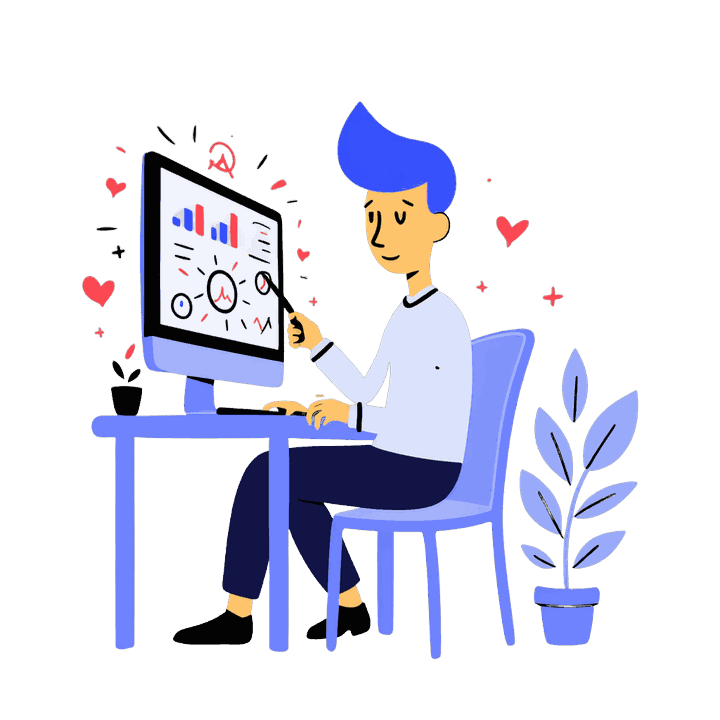
There are two different bills in Facebook advertising, and owners conflate them constantly. The ad budget is what Meta charges to show your ads, it's billed by the platform directly to your card, and $30 a day is the floor where a local Facebook ad campaign gets enough data to learn. The management fee is what you pay a person to run the account, and that's where the pricing games live, because most agencies charge a percentage of your ad spend, so their invoice grows every time your budget does.
| What you pay | To whom | How much |
|---|---|---|
| Ad budget | Meta, directly | $30 a day minimum, you set the ceiling |
| Management | Another Monday | From $500 a month, per channel, stepping up with account size |
My management fee starts at $500 a month per channel and steps up with the size of the account. Meta or Google, same ladder, and each channel is priced on its own. I never charge a percentage of your ad spend. The fee steps up because a bigger budget means more campaigns to build and more hours to run them, not because I take a cut of what you spend, and every step is published, so you know what growing costs before you decide to grow. How the whole budget splits across channels is its own question, and the what a local business should spend a month guide walks that math.
Another Monday manages Meta ads for small businesses from $500 a month, per channel.
Is $10 a day enough for Facebook ads?
Ten dollars a day can teach you things, but it rarely books jobs. At $300 a month, Meta's system gets so few conversions to learn from that campaigns sit in the learning phase for weeks, and your results swing on noise. I hold the floor at $30 a day because that's where a local Facebook ad campaign starts producing patterns you can act on instead of anecdotes. If $300 a month is the whole marketing budget, ads probably aren't the first move at all; the free and cheap groundwork in how to promote your business locally compounds better at that size.
The five ways small businesses waste Facebook ad spend.
Launching without the pixel.
Weeks of ad spend with no conversion data teaches Meta nothing, so the Facebook pixel goes in first, always.
Interest targeting instead of customer data.
Guessing that your target audience "likes home improvement" is weaker than handing Meta your actual customer list and asking for more people like them.
Boosting posts and calling it advertising.
The boost button optimizes for likes. Likes don't call you.
Sending clicks to the homepage.
An ad about one offer lands on a page about that offer with one clear call to action, or the click leaks. The landing page is half the campaign.
Judging it in week one.
Facebook ad campaigns wobble before they settle. Kill decisions in the first days throw away the learning you just paid for, so changes get made on schedule, not on nerves.
What a Meta ads agency actually does for a small business.

A Meta ads agency earns its fee in the unglamorous weekly work inside Ads Manager: building campaigns around your locations and offers, structuring audiences from your customer data, writing ad copy from your ad creatives and assets, A/B testing until winners are obvious, watching frequency so your neighbors aren't sick of you, and wiring conversions so every lead gets counted. Then reporting that says what came in, what it cost, what the ad performance and return on ad spend actually look like, and what changes next, in plain English.
With me, that management covers the whole setup: pixel installation, targeting and retargeting, campaign setup and ongoing management across Facebook and Instagram placements, plus hands-on help with your offer and the landing page it points to, because the ad is only half the campaign.
What I don't do is invent demand for a service nobody wants, or keep spending your money on a campaign the numbers say is dead. Sometimes the honest weekly note is "pause this, fix the offer first." A fee that is not a cut of your spend makes that sentence easy to write. The rest of the digital marketing that runs alongside the ads, the website, search, content and social media, lives on the what the plans include page.
Tell me about your business
A few details about what you have tried on Meta and I'll look at your market before I reply, usually within one business day.
- 450K+ search impressions across the sites we manage
- 5,800+ organic search clicks across the sites we manage
- 600+ leads and booking requests across the sites we manage
Last 90 days, across the sites and Search Console/GA4 accounts Another Monday manages. Figures as of August 2026.
What does Meta ads management cost?
Meta ads management at Another Monday starts at $500 a month per channel and steps up with the size of the account. Google and Meta price the same, and each channel is billed on its own. Your ad budget stays yours, billed by Meta directly to your own card rather than routed through me, so what you spend on advertising and what you spend on management never get tangled up in one invoice.
What ad management costs
Two numbers, always. My fee for running the account, and the ad budget that goes straight to the platform. Move the slider to the budget you have in mind.
Every ad account I run comes with:
- Your Google or Meta ad account set up with you, not handed over as homework
- Conversion tracking wired into your CRM, your forms and your phone line
- Keyword and competitor research before a dollar goes out the door
- Campaigns and ad groups built around the way people search for you
- A deliberately small starting budget, so we buy data before we buy volume
- Negative keywords maintained, so you stop paying for the wrong clicks
- A landing page built and split tested if you have nothing worth sending traffic to
- Performance Max, YouTube and Demand Gen when they fit, never by default
- A monthly walkthrough of what came in and what it cost, in plain English
At this budget Room for a second campaign, optimization every week, and call tracking on your phone line.
What that budget buys
National averages, rounded up on purpose. Plenty of local businesses pay less than this, and that's the good surprise. The top band is a floor rather than a ceiling: legal and injury terms regularly run past a hundred dollars a click.
None of the numbers feel doable? Let's have a conversation about it. We love working with local businesses and helping them grow, no matter what stage you're in.
I never charge a percentage of your ad spend. The fee steps up with the size of the account because a bigger budget means more campaigns to build and more hours to run them, not because I take a cut of what you spend. Percentage-of-spend pricing is the industry default and I understand why: it scales the agency's revenue with the account whether the work grew or not. It also means the agency gets a raise every time they convince you to spend more, and I would rather what I recommend and what I invoice stay two separate questions.
The part I paid for the hard way.

Before any client trusted me with an ad account, I ran Google and Meta ads on my own businesses, my own money, my own mistakes. I've bought the wrong audience, judged a campaign too early, and sent expensive clicks to a page that didn't convert, all on my own card, which is exactly why those mistakes don't happen on yours. I built Studio 87, my event venue, to 380+ bookings with search driving the growth and ads running on top, so I've been the small business owner reading the invoice, not just the one sending it.
Every mistake in here, I made on my own money first.
Facebook ads or Google Ads: which comes first?
Google catches people already searching for what you sell; Facebook builds brand awareness and demand in potential customers who didn't know you existed. That is the real split between search and social media advertising, and it decides which one small businesses should fund first. For most local service businesses with a working budget, Google comes first, because the person typing "auto body shop near me" is closer to paying you than the person scrolling past dinner photos. Facebook earns its slot when you've got a visual product, an offer worth interrupting someone for, or a search market you've already covered. You can run both, priced per channel from $500 a month each, and the Google Ads agency in Baltimore page covers that half of the system, same ladder, same reporting.
Running Facebook ads for a local business in Baltimore.
I run Another Monday out of Baltimore, Maryland, and most of the accounts I manage are local service businesses in the DMV, so the campaigns I build default local: tight radiuses around real locations, offers written for this market, and budgets sized for a local business, not a national brand playbook. If you've been searching for a Facebook ads agency Baltimore businesses actually pick up the phone for, that's the fit conversation, and it usually takes one call. Everything works the same for clients outside Maryland, and en español.
Facebook ads questions, answered.
Are Facebook ads worth it for a small business?
Facebook ads are worth it when your offer already converts, your budget clears about $30 a day, and tracking is installed so results get counted. They're not worth it as a rescue for a service nobody's buying or as the first spend of a very small budget.
How much do Facebook ads cost for a small business?
Plan on two costs: an ad budget of at least $30 a day billed by Meta directly, and a management fee if someone runs the account for you. Mine starts at $500 a month per channel and steps up with the size of the account, never as a percentage of your spend.
Is $10 a day enough for Facebook ads?
Ten dollars a day is enough to experiment, not enough to book jobs reliably. Local campaigns need roughly $30 a day before Meta's system gets enough conversions to optimize toward, so under that, expect noisy results and slow learning.
Is $500 enough for Facebook ads?
There are two different $500s in this conversation and owners mix them up constantly. One is a monthly ad budget, about $16 a day, which is enough to test whether your offer and your audience connect but short of the $30 a day a Facebook ad campaign needs before it produces steady leads. The other is where my monthly management fee starts, a separate bill that never comes out of your ad budget and only steps up when the account itself gets bigger. If $500 a month is the entire marketing budget, the how to size a marketing budget guide walks through where to put it first.
Do Facebook ads work for small business?
Facebook ads work for small businesses that want brand awareness and lead flow beyond the potential customers already searching for them. They amplify a working offer to new audiences; they don't fix a broken one.
How much does it cost to hire a Facebook ads expert?
Hiring Facebook ads help ranges from a few hundred dollars a month with a freelancer to percentage-of-spend agency deals that grow with your budget. I start at $500 a month per channel and step up with the size of the account, because a bigger budget means more campaigns and more hours, not because I take a cut of what you spend.
How do I set up Facebook ads for a small business?
Set up the business assets first: a Facebook business page, a Meta Ads Manager account, and the Facebook pixel on your website. Then build the first campaign around one offer, one audience from your customer data, and one landing page that matches the ad, and let it run long enough to learn.
What's a realistic Facebook ads budget for a small business?
A realistic starting budget is $30 a day, roughly $900 a month, held steady for at least a full month before you judge a Facebook ad campaign on it. Below that the campaign starves for data; well above it only makes sense once the tracking proves the leads are profitable.
Are free Facebook ads worth trying for a business?
Free Facebook advertising isn't a real option, only organic social media posting is, and that's worth doing even though it isn't advertising. Free posting builds proof for the people who already found you; paid placement is what puts you in front of people who haven't.
Do Facebook ads and Instagram ads run together?
Yes, one Meta campaign can run across Facebook and Instagram from the same budget and dashboard, so you buy two social media platforms with one setup, and for most small businesses that's the right default. The system shifts spend toward whichever placement is producing.
Do you charge a percentage of ad spend?
No. I never charge a percentage of your ad spend. Management starts at $500 a month per channel and steps up with the size of the account because a bigger budget means more campaigns and more hours, not because I take a cut of what you spend. Your ad budget is billed by Meta directly to you and never runs through me.
Can I run Facebook ads and Google Ads at the same time?
Yes, and the pairing is often the point: Google captures the demand that exists, Facebook creates demand that doesn't yet. Each channel is priced on its own, starting at $500 a month to manage, and the reporting shows both side by side.
Tell me what you're selling, and I'll tell you if Facebook ads fit.
Tell me what you have tried on Meta and I'll look at your market before I reply, usually within one business day. If the honest answer is "don't run Facebook ads yet," that's the answer you'll get.
También hablamos español.