
Websites · design and search together Small business website design, built to get found.
Small business website design has two jobs. Most websites only ever manage the first one, which is why yours can look like a real business and still sit where nobody searching for what you sell will ever see it. Looking good and getting found come from different decisions, so I make both at the same time, and I'll show you the search numbers off my own clients' accounts so you can see what the second one is worth.
Based in Baltimore, working with businesses well past it. 25+ websites built, Google Partner, English and Spanish.
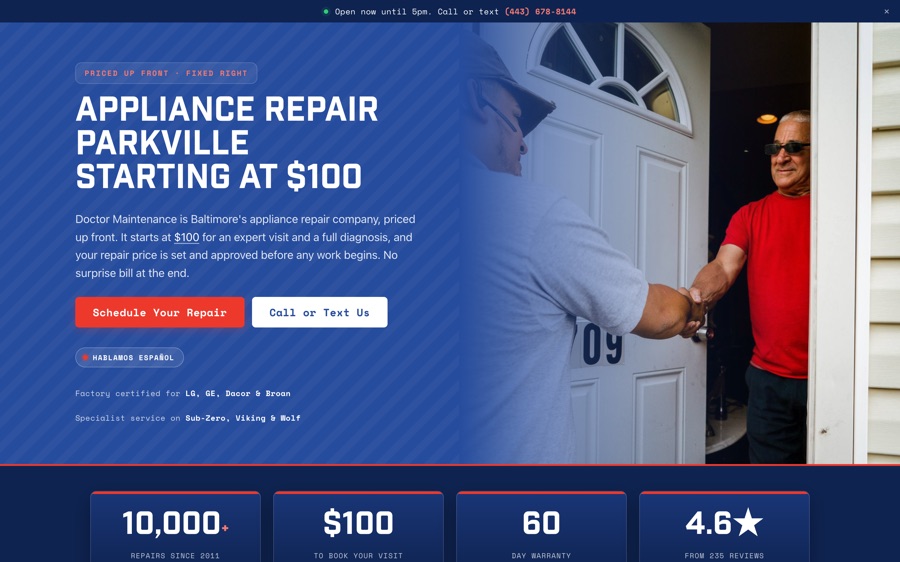
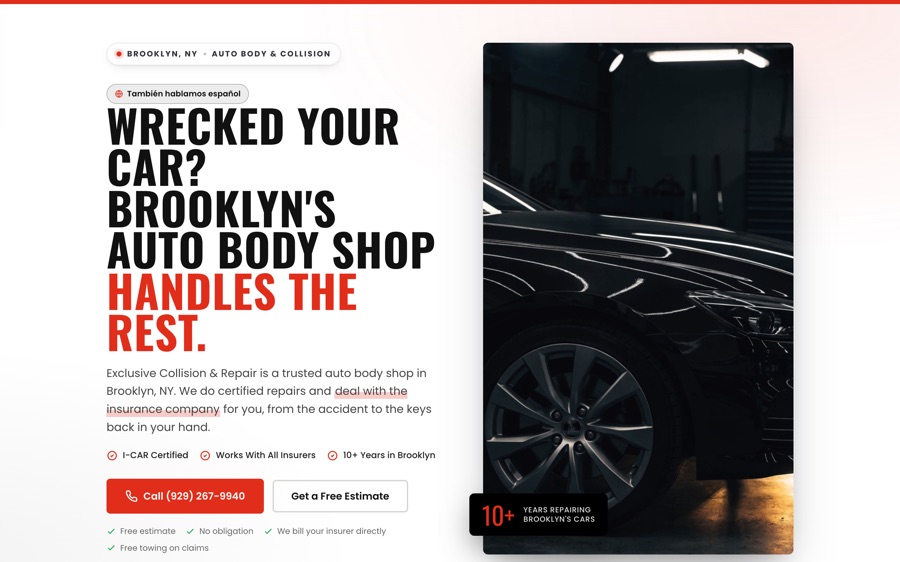
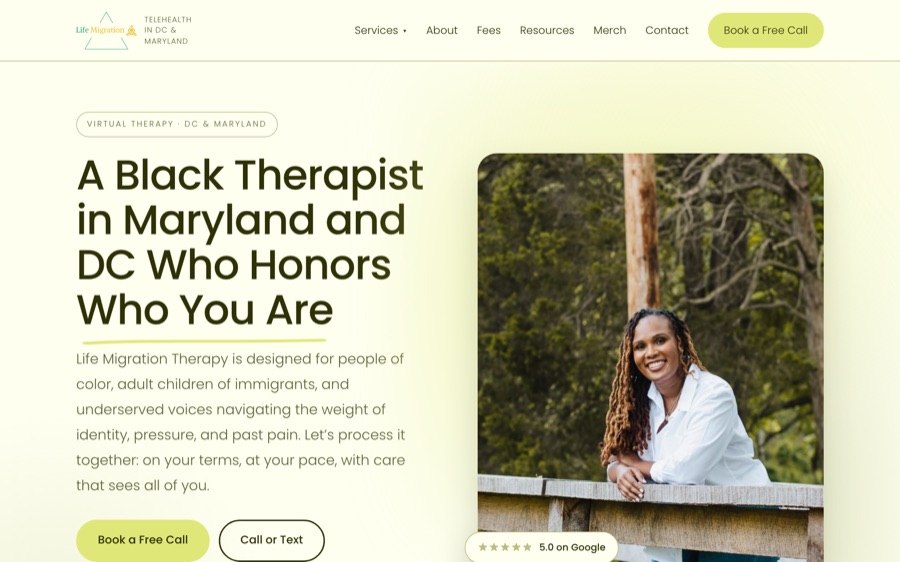
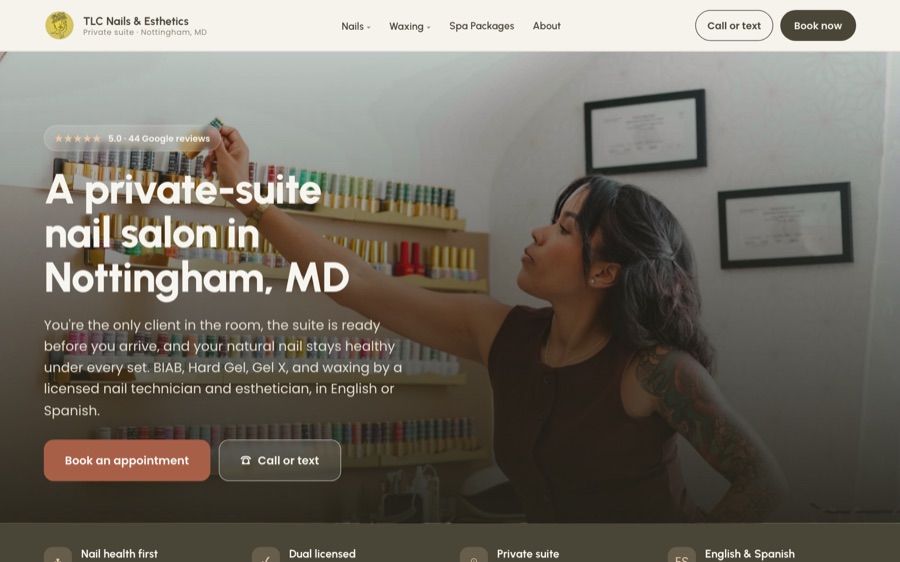
What makes a small business website work?
A small business website has two jobs to do at the same time. It has to look like a business worth calling, and it has to be put together so a search engine can hand the right page to the right person. The look is what earns trust in the first few seconds. Whether anybody ever gets those seconds was decided much earlier, in how the pages were structured.
Design does the first ten seconds
People decide whether you look real before they read a word, so it's photos of your own work, plain language, and a phone number they can tap without hunting for it.
Structure is what gets ranked
A search engine ranks pages one at a time, so you need a page for each thing you sell, headings written in the words people type, and clean code underneath them.
Every page needs somewhere to send people
A call, a form, a booking. When a page asks for nothing, most of the people reading it leave without doing anything at all.
That last one is where most small business websites lose, and it's usually the cheapest thing to fix. Most of the sites handed to me have a single page carrying every service, because that's how the template arrived and nobody ever pulled it apart. On one client's website, half the times it showed up in search results somebody had named a specific machine, like refrigerator repair, and only 9% had the city attached. People search for the exact thing they need, so if that thing is one paragraph on a page about six other jobs, you're asking Google to rank a paragraph.
A website nobody finds is a brochure in a drawer.
Why does a good-looking website still get no calls?

Showing up in search results and getting found are two different things, and the gap between them is bigger than most owners expect. I took 400 days of Search Console data off one client's website, an appliance repair company, and sorted every search appearance by where the page was sitting when somebody saw it. A spot near the top was worth more than 200 times a spot on page three.
| Where the page ranked | Click rate | Out of 1,000 people who saw it |
|---|---|---|
| Positions 1 to 3, the top of page one | 11.9% | 119 people |
| Positions 11 to 19, page two | 0.14% | roughly 1 person |
| Positions 21 to 49, page three and past it | 0.05% | about 1 in every 2,000 |
That bottom row is where this website spent most of its life. 59.7% of the times it turned up in search, it landed between position 21 and position 49, far enough down that almost nobody clicks. The photos were good and the trade was good, and none of that counted for much while the pages were parked down there.
That's a design problem before it's a search problem. What a page ranks on is what it says and how it's put together: one subject per page, a heading that matches what somebody typed, text a crawler can read without running scripts, internal links pointing at the pages you care about most, and a title worth clicking once you're up there. Those decisions get made while the website is being designed, and retrofitting them later costs more than doing them in the first place. When I say SEO is built in, that's the part I mean.
Search Console, one appliance repair client we manage, 400 days to August 2026. Click rates and shares only.
Two businesses that already had a website, and what changed after the work.
Neither of these is the website on its own. Each one is a rebuilt website plus the search work that came after it, and I'd rather show you the flat months than pretend a line jumped on launch day. Both businesses were good at the work and invisible for the words their customers were typing.
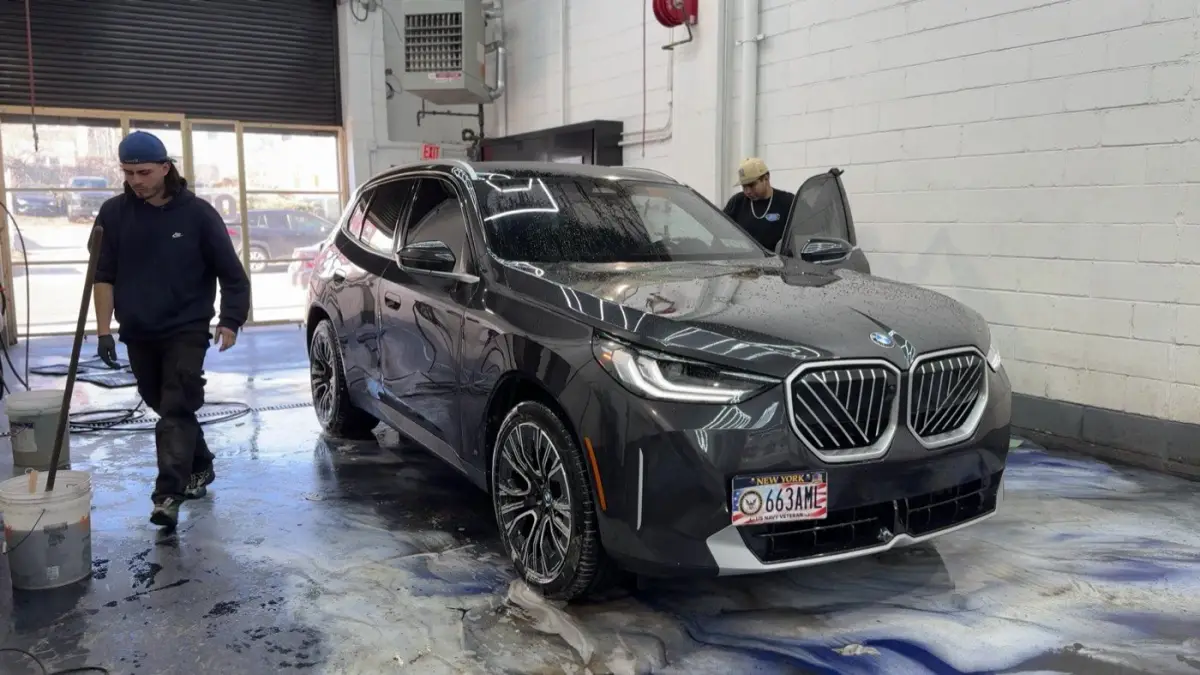 2.4x
2.4x more people finding an auto body shop on Google
Six months before it, organic clicks ran 14 to 20 a month and never broke out. July 2026 came in at 49, measured against the best of those six months.
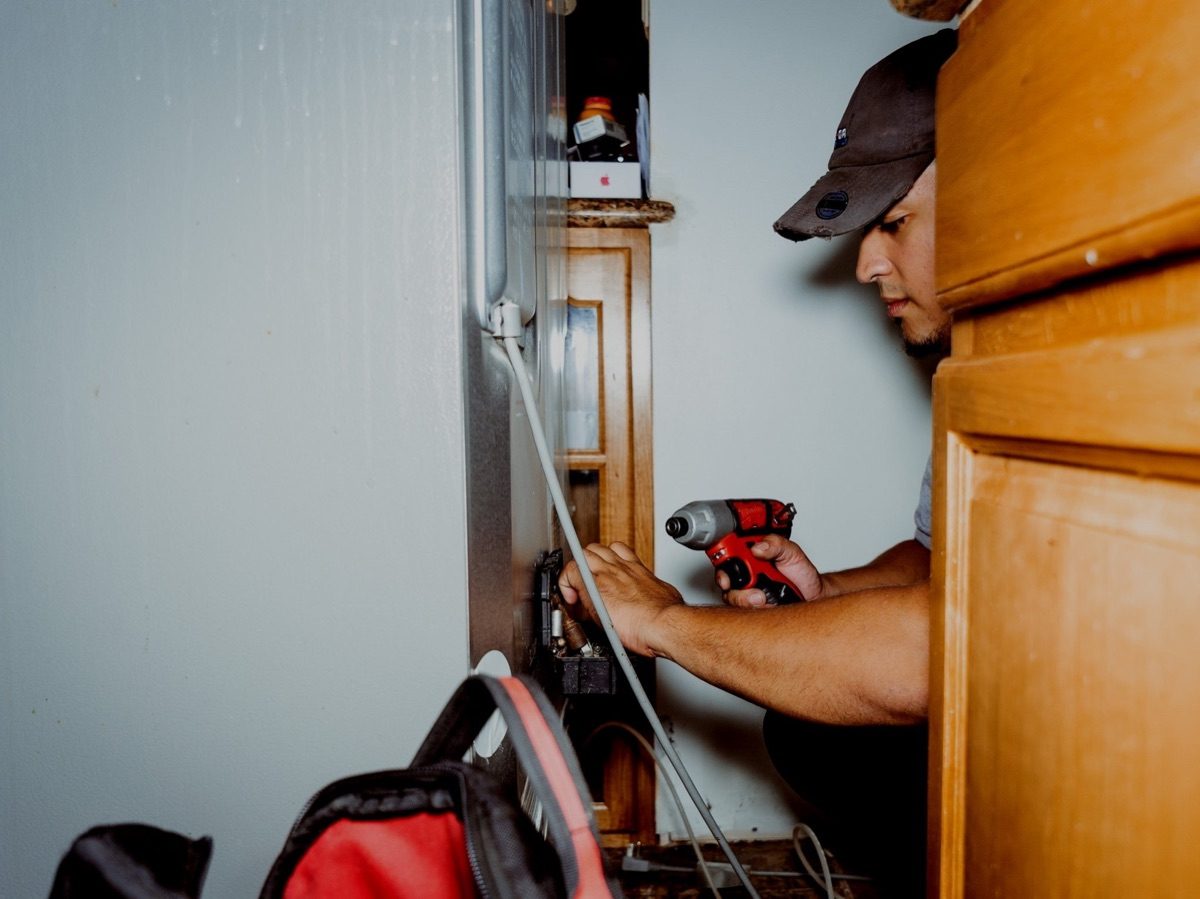 1.7x
1.7x more people finding an appliance repair company on Google
Twelve months sitting in an 89 to 120 band, and 102 the month before. July 2026 came in at 214, measured against the top of that band.
The auto body rebuild is written up month by month, including the months before it, in the auto body shop marketing case study. And if you run a contracting business, I go further into what your kind of website needs on website design for contractors.
Is your website pulling its weight?
Send me what you sell and where you sell it, and I'll look at how you're showing up before I reply, usually within one business day.
- 450K+ search impressions across the sites we manage
- 5,800+ organic search clicks across the sites we manage
- 600+ leads and booking requests across the sites we manage
Last 90 days, across the sites and Search Console/GA4 accounts Another Monday manages. Figures as of August 2026.
What a small business website has to do besides look good.
Pages aimed at real searches
Each page goes after something people type into Google: a service, a town, or one of the questions they ask themselves before they call anybody at all.
Readable by AI as well as Google
Plenty of buyers ask an assistant for a name before they ask a friend, and those tools repeat what they can read cleanly, so the answers sit in plain sentences near the top of the page.
Made for a phone first
Most of your visitors turn up on a phone, so responsive design isn't a box I tick at the end. Type you can read at arm's length, and buttons a thumb can hit without zooming.
Designed to turn visitors into customers
Ranking is only half of it. Every page is designed toward one thing to do next, because when the next step is left up to the reader, most people just leave.
Forms that never lose a lead
I fill in every form myself before launch so I know the spam gets blocked, a copy of each submission gets stored, and the email lands in your inbox instead of a spam folder.
Reports an owner can read
Once a month you get which pages brought inquiries and what people typed to find them, written in plain English so nobody has to go digging in a dashboard.
All six come down to one question, which is whether each page can be made for its own job or whether they all come out of the same mold. A template hands every page the same skeleton, and search engines rank pages one at a time. Custom code lets each page carry its own structure, and that's the difference the table above is measuring. I've put more than 20 websites on Squarespace myself and I'm a Circle Gold member there, so I know what a template holds up under and where it stops. If you're weighing the platform question on its own, SEO on Squarespace covers what you can and can't do inside one, and Wix vs Squarespace sets the two biggest template platforms against each other on price, on search and on what each one lets you take with you.
Three checks that tell you what you're dealing with.
- Type what a customer would type. The service, then the town. If your business name is the only search that finds you, then everybody finding you already knew you existed, which is a different crowd from the one you're trying to reach.
- Open Search Console and read average position. Anything past 20 is earning close to nothing, however many times it turned up, and that one number will tell you more about where you stand than a week of guessing at it.
- Count last month's calls, not last month's visits. Pull up the phone log and the inbox. If you can't tell which inquiries came from the website, what's missing is tracking, and tracking is a much smaller job than a rebuild.
Do those three and you'll know whether you're dealing with a design problem, a search problem, or a tracking problem. They cost very different amounts to fix, so it's worth knowing which one you have before anybody quotes you for a new website. That's the order I go in when I look at a site before a call, and if what you already have can carry real search work, I'll tell you so. The Baltimore SEO company page covers what that work involves.
Who these websites get built for.
Most of my roster is local service businesses: an appliance repair company, a therapy practice, an auto body shop, a tutoring service, a nail studio, a plant studio, a painting company, a real estate media firm, an event venue, and a community events platform. It's a mixed list, and every one of them came to me for the same reason, which is that the phone wasn't ringing the way the work deserved.
I ran a business before I ran an agency. Studio 87 was my event venue in the Baltimore area, and it cleared past $100K in its first year with search doing most of the heavy lifting and ads running on top, then grew to 380+ bookings across about three and a half years. It's closed now. I paid for every lesson in that place with my own money, so when I tell you what a website has to do, I'm talking about the thing that kept my own calendar full. More of that story sits on the the longer version of my story page, and the businesses I work with are listed on the client roster.

How the work runs.
Strategy and design
We map the searches, the customers and the look together. You sign off on the design direction before a line of code gets written.
The pages themselves
Custom coded pages, written and designed one at a time, so the words and the layout get decided together by the same person.
Checks by hand before launch
I go through every page myself: how it loads on a phone, whether a form submission reaches your inbox, and whether the tracking counts a call as a call.
Launch, then keep going
We move the website over without dropping the rankings you already have, then keep publishing pages every month and showing you what they brought in.
Your website gets made inside a monthly plan instead of quoted as its own project. The plans run $800 a month at two pages and $3,500 at ten, and the rate per page drops as the site gets bigger. What that changes is everything after launch: the pages keep coming, so the website working for you in month twelve is a bigger one than the website that went live, and the fixes, the new pages, the monthly report and somebody you can text all sit inside the same number. The first three months cover the foundational work, and it's month to month from there, with no long contract.
Moving an existing website over gets quoted once I've looked at it, and a small one usually comes across at no extra cost. Every plan and what sits at each step is on the marketing services page. And if you want to talk it through with somebody before you spend anything, that's what a small business marketing consultant is for, and the first conversation costs nothing.
Questions to ask before you pay for a website.
How much does it cost to have a website built for a small business?
Bought as a one-time project, small business web design usually lands somewhere between $3,000 and $10,000. Mine works the other way around. Your website gets made as part of a monthly plan that starts at $800, so it keeps growing after launch and you know what you're spending before anything begins. Every plan sits on the marketing services page, and if what you're pricing is a rebuild, the website redesign cost page goes through that on its own.
How do I build my own website for my small business?
You'd register a domain, pick a website builder, start from a template, and write the pages yourself. That works fine when the website is a business card. It stops working when you need search engines to rank a separate page for each of your products or services, because a template hands every page the same skeleton. If you enjoy that kind of work and have the hours for it, doing it yourself may still be your best move, and I'll say so on a call.
Should I use a template for my small business website?
A template is a fair starting point for a website nobody needs to find, like a portfolio you send people directly. Where it runs out is search: every page shares one structure, you can't reach the code, and the speed is whatever the platform hands you. For a business that needs a separate page ranking for each thing it sells, that ceiling shows up early. I built on Squarespace for years before I moved to custom code, so this comes from having used both.
Why does a good-looking small business website still get no calls?
Almost always because nothing on it ranks for what people search. Sorting 400 days of one client's Search Console data by position, pages sitting at 21 or worse earned about one click for every 2,000 people who saw them, against 119 per 1,000 in the top three. A website can look excellent and still be invisible, and the fix is in how the pages are put together underneath, which is a different job from making it look nicer.
How can I tell whether my small business website is bringing anyone in?
Three checks, and none of them takes ten minutes. Search the service and the town a customer would search, and see whether you come up at all. Then open Search Console and look at average position, because anything past 20 earns close to nothing however many people see it. Last, pull last month's calls and form fills and see whether you can tell which ones came from the website.
Can AI build my business website?
AI will hand you a website in an afternoon and it'll look fine. What it won't do is work out which pages your market searches for, write the ones nobody in your town has bothered to write, or notice that your booking form quietly stopped delivering. I use AI every day in this work, mostly on the mechanical parts, and I still decide what gets published and why.
What should a small business website include?
At minimum, a page for each of your products or services, your service area named in plain words, real photos of your own work, reviews somebody can read without leaving, a phone number you can tap to call, and one form tested end to end. Anything past that list has to earn its place by making the website easier to use, not busier to look at.
What happens after the website launches?
Launch is the start of the work. The plan keeps publishing pages every month, so by month twelve the website is bigger and ranking for more searches than the one that went live. Post launch support is part of the same number: fixes, new pages, the monthly report on what brought inquiries, and somebody you can text when a form looks broken. Before any of that, what a website timeline really looks like is published with the dates from seven real projects.
Will a new website grow my small business?
A website grows a business when people can find it and it's built to turn visitors into customers. On one website I made, 1 in 14 visitors turned into a lead, which came to 254 calls, forms and tour requests out of 3,456 visits between April and July 2026, with no ads running at all. That's one business and not a promise, though a number I can point at is worth more to you than an industry average nobody can source.
Do you only work with small businesses in Baltimore?
No. Baltimore and the DMV are home, and the roster is mostly shops and practices around Maryland. The approach holds anywhere though, because a small business in any town gets found the same way, with a page for each thing it sells written in the words its customers type. If you're local, the Baltimore web design page covers how that runs here.
Do you build small business websites in Spanish?
Yes, English and Spanish both, and the Spanish pages get written properly instead of run through a translator. That matters for search as much as for reading, because a page translated word for word misses the phrases people type in Spanish and ranks for none of them. Several businesses I work with serve a Spanish speaking market, so both versions get planned together from the start.
Have a website already?
Paste the address and tell me what you sell. I'll look at where it ranks and what's missing before I reply, and if a rebuild would be the wrong thing to spend on, I'll say that.
Your Website Should Be Your First Employee That Works 24/7 For Your Business.
Tell me what you sell and where you sell it, and I'll walk you through what your website would have to do to bring in customers. If what you already have can do that, I'd rather say so on the call than sell you a new one.
También hablamos español.